Who provides vulnerability scanning and assessments in Adelaide?
Subnet does. We are based in Forestville, Adelaide, and run vulnerability assessments for South Australian organisations using Tenable Nessus. We agree the scope, run and verify the scans, and turn the results into a prioritised plan with owners and timeframes. It can be a one-off assessment or a regular cycle.
How often should vulnerability scans be run?
Regularly, and after any significant change. New vulnerabilities are published every day, so a scan is only a snapshot. Many organisations scan internet-facing systems weekly or fortnightly and internal systems at least monthly, and the Essential Eight sets tighter expectations at higher maturity levels. Subnet agrees a schedule that matches your risk and your patching cycle.
Is vulnerability scanning the same as penetration testing?
No. They are different activities with different methods and objectives. Confirm which is required and specify the scope accordingly.
Does a clear scan prove compliance?
No. Findings can inform control improvement, but a scan is not a certification or a guarantee of compliance.
What is the difference between Nessus Professional and Nessus Expert?
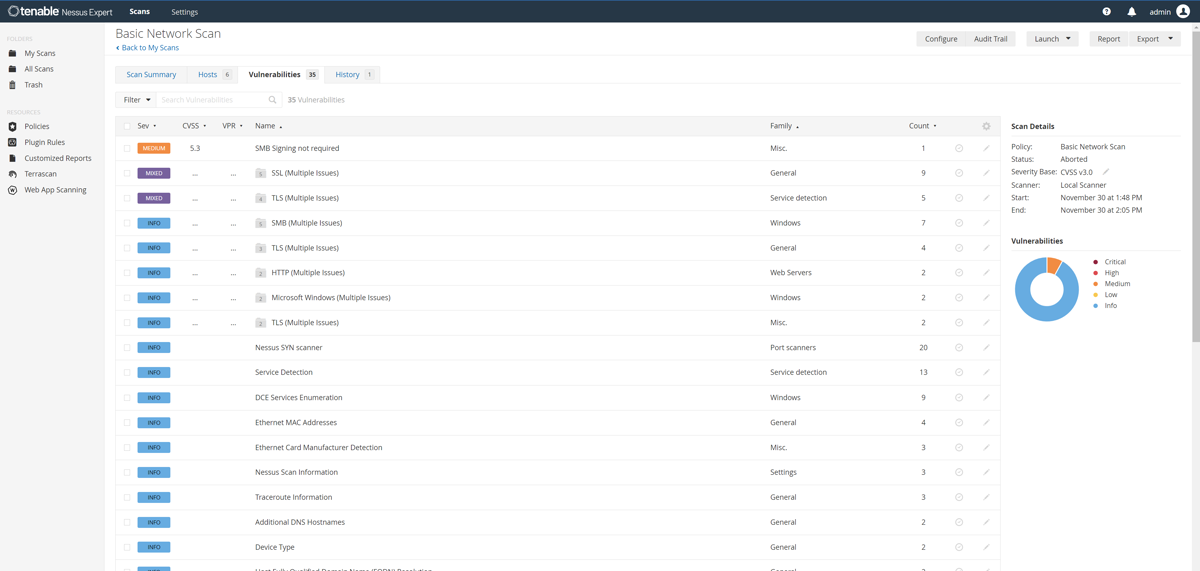
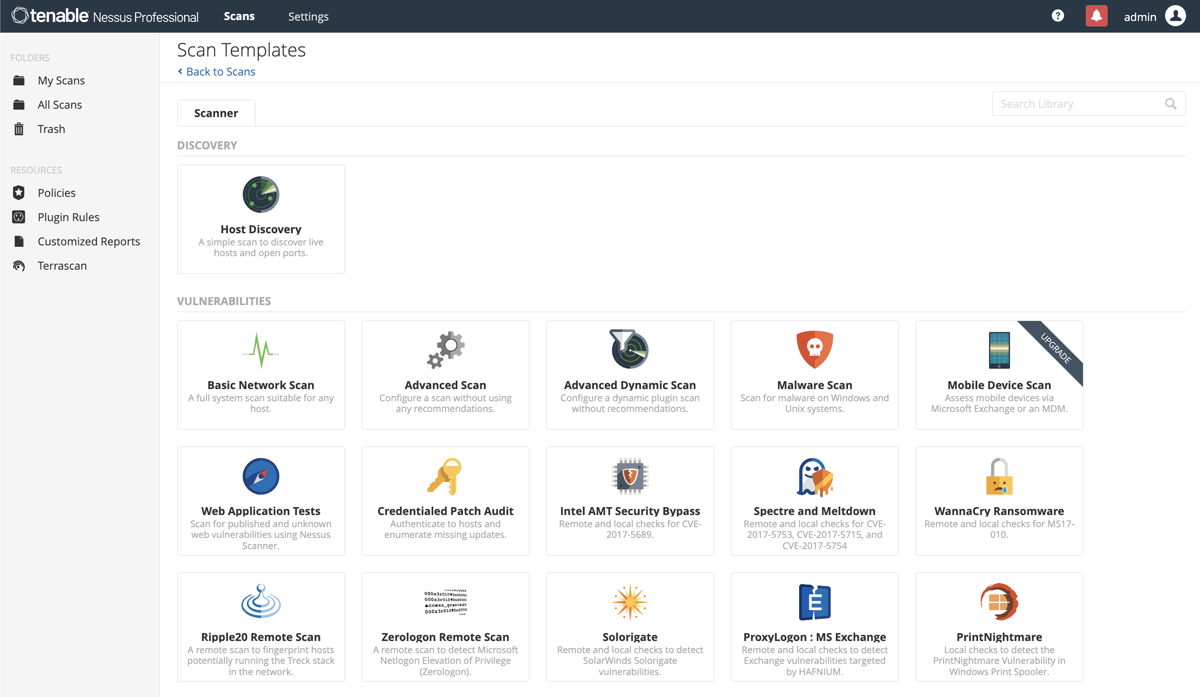
Tenable’s product pages list vulnerability assessment, configuration and compliance audits and configurable reporting for both editions. Expert adds web application scanning and external attack surface scanning, which Tenable’s licensing guide says Professional does not include. Tenable Vulnerability Management is a separate cloud product, and Tenable describes Nessus as part of its wider platform. The edition should follow the scope: which internal systems, web applications or internet-facing assets need assessing, and who will use the results.
What access does a credentialed scan need, and why does it matter?
A credentialed scan signs in to a system so Nessus can read installed software and local settings instead of inferring them from outside. Tenable’s documentation says what it can see depends on the account used: on Linux, patch-level checks can work with an unprivileged account but fuller checks need root, and on Windows it calls for a local administrator account. Agree which accounts will be used, who creates and removes them, when they will be active and how failed logins will be reported, because a scan with failed logins can look cleaner than the environment really is.
Can a vulnerability scan disrupt our systems?
Active scanning sends traffic to the systems it assesses, so sensitive devices need care. Tenable’s documentation says Nessus’s fragile-device options for network printers, NetWare hosts and operational technology devices are off by default, and warns against enabling full operational technology scanning in high-traffic production environments. Scan settings also affect how long a scan takes. Agree the scan window, exclusions, any devices needing a gentler approach and who can be contacted if something behaves unexpectedly.
How does Nessus rank vulnerabilities, and is that enough to set priorities?
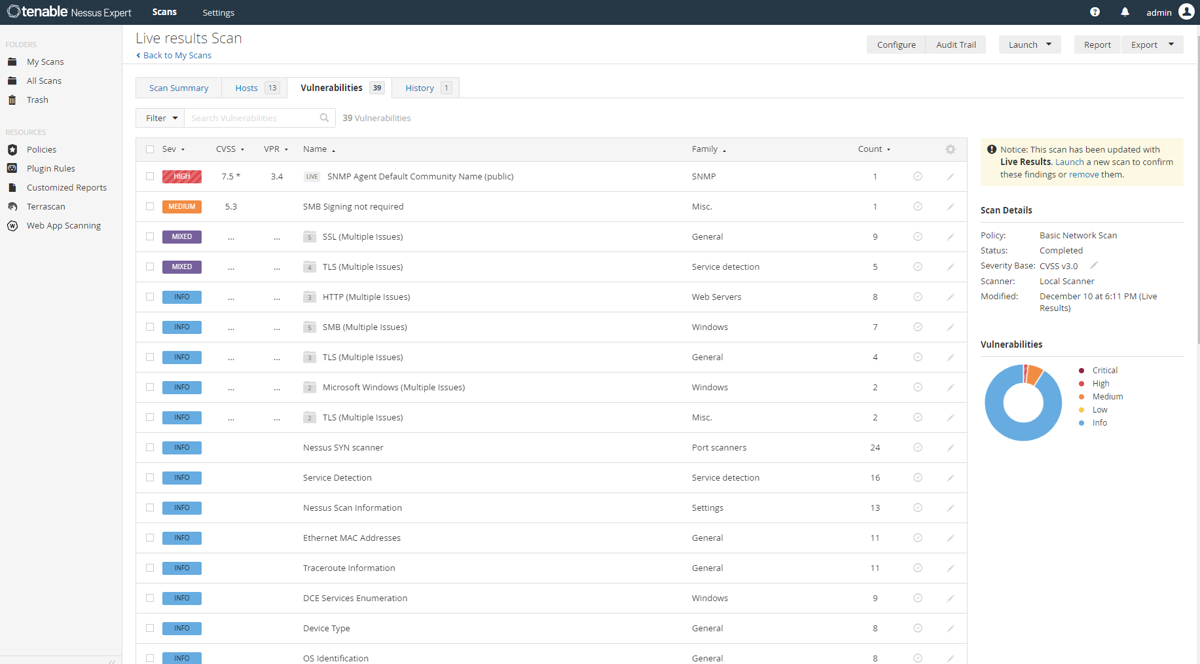
Nessus reports CVSS-based severity, and it also provides Tenable’s Vulnerability Priority Rating (VPR), which estimates how likely a vulnerability is to be exploited given current threat activity. Tenable’s documentation says VPR is not tailored to your organisation, is updated only when you rescan, and is not given to findings without a CVE. Scores are a starting point. The ranking still needs the business importance of each system, whether it is exposed and who can apply the change.
Can Nessus check settings against benchmarks such as CIS?
Tenable states that Nessus can audit configuration against CIS benchmarks and other best practices, in addition to looking for missing patches and software flaws. Audit results show how systems compare with the chosen benchmark. They do not make the organisation compliant with a framework. Decide which benchmark is relevant, which systems it applies to and who will approve exceptions before the audit is run.
How is Nessus licensed, and does the cost depend on how many systems we scan?
Tenable’s FAQ describes Nessus Professional as an annual subscription that allows unlimited IP addresses, while Nessus Expert includes a set number of web applications and external attack surface domains with more available as add-ons. Tenable Vulnerability Management is licensed per asset. Tenable changes its editions and prices, so check the current terms. Who holds the licence and who renews it should be agreed in the scope rather than assumed.